





4 - 7 September 2026
Prague | Czech Republic
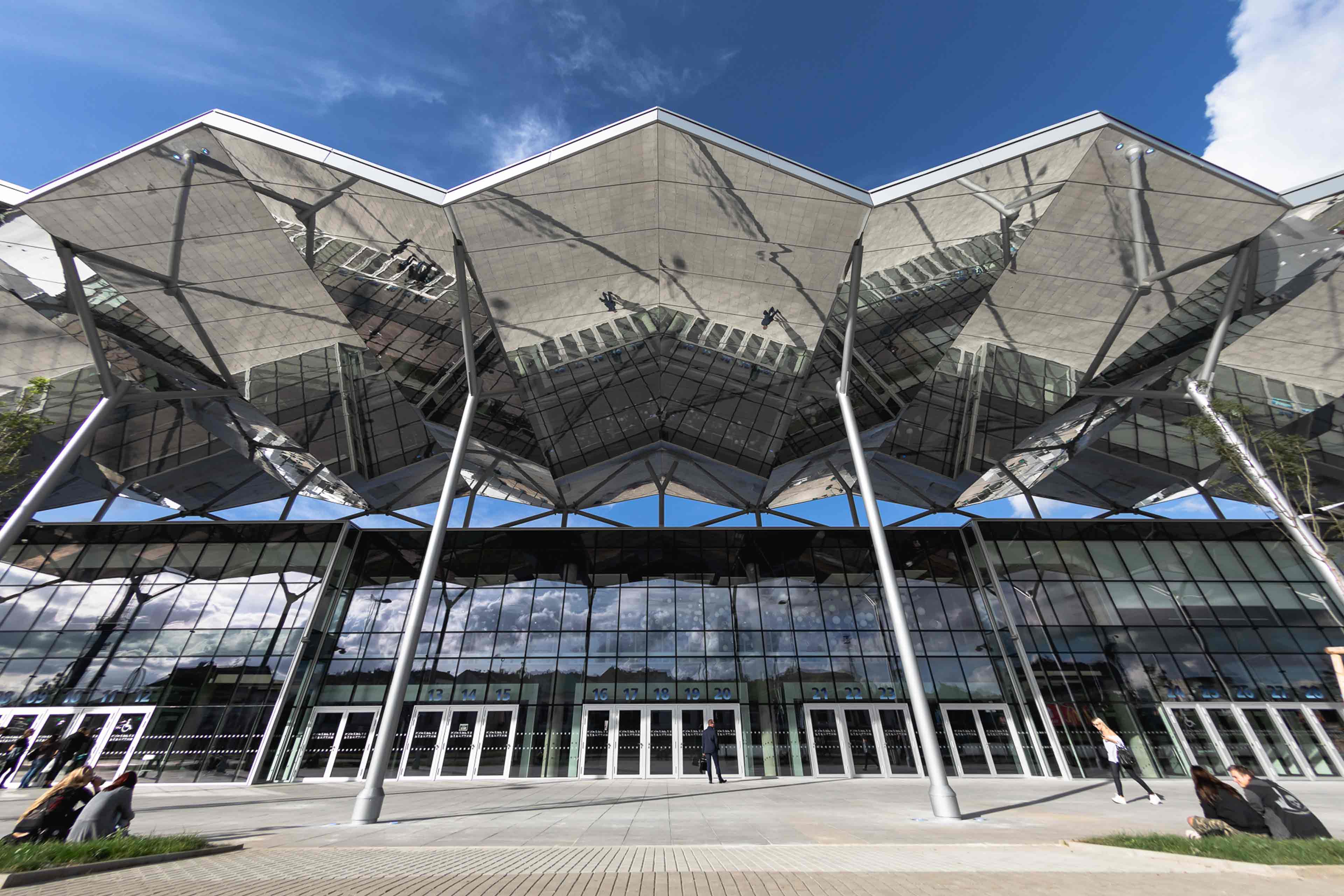
O2 universum
O2 universum
Discover Tomorrow‘s Dentistry
in the Heart of Magical Prague
in the Heart of Magical Prague
Room: E2
Date: 6.9.2026
Timings: 09:00 - 10:50
Abstract:
The intraoral scanners are becoming an indispensable tool in the digital workflow of any modern dental office. Their use ranges from acquiring information for the construction of prosthetic artifacts to supporting guided surgery processes and everyday communications mechanisms between operators and patients. The indication for their use has expanded to every work process including the most complex clinical conditions such as full arch rehabilitation or removable prosthesis. The intraoral scanners are today easily connected with all the other tools that are today necessary for a full digital workflow; they can make ortho-simulation, mesh compare, printing models design and many other functions. The speakers will approach the topic of digital impression from different points of view, providing participants with a comprehensive overview of all the advantages and limitations of their use. A wide part of the session will be dedicated to a panel discussion and questions and answers from the audience.
Learning Objectives of The Session:
1. Understand the role of intraoral scanners within contemporary digital dental workflows, including prosthetic, surgical, orthodontic, and communication applications
2. Evaluate the advantages, limitations, and clinical indications of intraoral scanners in both routine and complex rehabilitative cases, including full-arch and removable prosthetic treatments
3. Explore the integration of intraoral scanners with advanced digital tools and workflows, such as guided surgery, orthodontic simulation, mesh comparison, and digital model design
Speaker 1: Assoc.Prof. Francesco Mangano
Title: Artificial Intelligence and mixed reality in implant dentistry
Abstract: Artificial Intelligence (AI) and Mixed Reality (MR) are transforming implant surgery. AI, based on machine learning, enables the automatic detection and diagnosis of dental conditions from 2D radiographs and the identification and segmentation of anatomical structures from 3D CBCT scans. It also allows automated planning of implant positioning, improving accuracy, and efficiency. MR, on the other hand, overlays interactive 3D holograms onto the real environment through transparent visors, enabling clinicians to visualize and interact with virtual models while maintaining contact with reality. This technology enhances patient communication, supports remote collaboration among dental professionals, and improves surgical planning. The integration of AI and MR leads to advanced applications such as holographically guided dynamic implant surgery, representing a significant step forward in precision and innovation in implantology.
Learning Objectives
1. Learn how to plan an implant with AI
2. Learn how to insert implants through mixed reality
3. Learn how to combine AI and mixed reality for implant planning and placement
Speaker 2: Dr Grzegorz Wasiluk
Title: Complete digital approach in full-arch, implant-supported prosthetic reconstructions: Evidence based protocols for IOS
Abstract: Digital dentistry is evolving and improving very quickly, giving more and more possibilities for all types of implant-based reconstructions. Current studies report that the accuracy of IOS is suitable not only for single crowns and short bridges screwed to dental implants, but the latest introduced scanners are getting much better accuracy in all-on-X complete arch rehabilitation cases. Accuracy of implant position is necessary to obtain a passive fit restoration, that's why digital scanning of completely edentulous patients remains challenging. It seems that the morphology of scan body has the biggest influence on scan accuracy for multiple implants of data acquisition. Certain manufacturers of IOS have started to work on specific software, giving the opportunity to import horizontal scan bodies from the library during the time of scanning. The newest approaches to this scanning pattern might be a valid alternative to stereophotogrammetry, which is recognized nowadays as a golden standard in collecting digital data in full arch implant-based reconstructions.
Learning Objectives
1. Compare different full-arch intraoral scanning patterns and evaluate their impact on the trueness and precision of implant-supported full-arch prostheses based on evidence-based data
2. Assess the indications, advantages, and limitations of stereophotogrammetry and horizontal scan body protocols using intraoral scanners for full-arch rehabilitation cases
3. Understand the complete digital workflow for manufacturing implant-supported full-arch prostheses, including digital data acquisition and the latest software advancements for horizontal scan body recognition
Speaker 3: Dr Isabelle Savoye
Title: Two Paths, One Goal: Comparing Thermoformed and Direct Aligners in Modern Digital Orthodontics
Abstract: This lecture explores the evolution of digital orthodontics by comparing two key aligner manufacturing strategies: conventional thermoformed aligners and direct 3D-printed aligners. While both approaches aim to deliver predictable and efficient orthodontic care, they differ significantly in workflow design, material behavior, and clinical flexibility. Particular focus will be placed on recent advancements in 3D printing, especially the growing role of directly printed aligners.
Learning Objectives
1. Attendees will be guided through the complete in-house digital workflow, from virtual treatment planning and aligner design to final production
2. The session will highlight how direct printing can enhance efficiency, enable deeper customization, and support a more streamlined, patient-focused treatment model
3. Using clinical cases and practical insights, we will critically evaluate indications, accuracy, material performance, and real-world implementation considerations for both systems. Participants will leave with a clear, evidence-based framework to support informed decision-making when integrating modern aligner technologies into contemporary digital orthodontic practice
Room: (TBC)
Date: (TBC)
Timings: (TBC)
Abstract:
Designing Your Dental Career: Technology, Safety, Business, and Esthetic Mastery for Women Dentists. This scientific session brings together four expert perspectives to address the evolving realities of modern dental practice. Topics include digital dentistry as a tool for flexible practice models, material safety and toxicology, strategic business development, and advanced restorative techniques. The session aims to equip women dentists with practical knowledge that supports clinical excellence, patient safety, and sustainable professional success.
Learning Objectives of The Session:
1. Explain how digital dentistry and cloud-based workflows can support flexible, efficient, and sustainable dental practice models, particularly in balancing professional and personal responsibilities
2. Identify key principles of material safety and toxicology in dental practice, enabling informed selection and handling of dental materials to protect both patients and clinicians
3. Apply fundamental strategies for building and managing a successful dental business, including practice positioning, financial planning, and long-term growth
4. Understand the clinical indications, workflow, and advantages of the injection moulding technique for achieving predictable esthetic and functional restorative outcomes
Speaker 1: Prof. Ingrid Różyło-Kalinowska
Title: From Jawbone to Periodontium: Diagnostic Clues of Bone Loss in Aging Women
Abstract: Aging and menopause involve hormonal changes that significantly affect skeletal metabolism and oral health in women. Declining oestrogen levels contribute to reduced bone mineral density, osteopenia, osteoporosis, and structural alterations of the alveolar bone and marginal periodontium, often progressing silently until advanced stages. This lecture highlights dental and periodontal findings as early indicators of systemic and local bone loss in aging women, with emphasis on radiographic assessment of jawbone density, cortical morphology, alveolar bone levels, and signs of periodontal breakdown. The impact of postmenopausal hormonal imbalance on bone remodelling and periodontal support is discussed in the context of daily dental practice.By stressing the dentist's role in recognizing subtle diagnostic clues and ensuring timely interdisciplinary referral, the lecture underlines the importance of early risk identification, comprehensive women's health care, and patient-centred management across the lifespan.
Learning Objectives
1. To explain the impact of menopause-related hormonal changes, particularly oestrogen decline, on skeletal metabolism, alveolar bone structure, and periodontal tissues in aging women
2. To learn how to identify early dental, periodontal, and radiographic indicators of systemic and localized bone loss, including alterations in jawbone density, cortical morphology, and marginal periodontal support
3. To be able to recognize the dentist's role in interdisciplinary detection, risk assessment, and timely referral of patients with suspected osteoporosis or menopause-related bone deterioration, supporting comprehensive women's health care
Speaker 2: Prof. Esra Can
Title: Esthetic and Functional Restorations Using Injection Moulding Technique: A Minimally Invasive Approach
Abstract: In contemporary restorative dentistry, the challenge is no longer just restoring the teeth but doing it in a minimally invasive, predictable and esthetically driven way. Injection moulding technique has emerged as a powerful tool to translate digital or analog planning directly into the mouth with high precision and with the introduction of the highly filled flowable composites, the technique became particularly powerful in additive restorations. When combined with proper patient selection, treatment planning and material selection,the technique offers esthetic and functional success particularly in patients with worn dentition, diastemas and full arch additive rehabilitation needs which will be discussed in this lecture in the light of scientific date and presented cases.
Learning Objectives
1. Learn key elements in patient selection, functional and esthetic analysis of anterior region for composite veneers and treatment planning for posterior composite restorations using injection molding technique
2. Gain insights into material selection, adhesive procdures and composite application techniques using digital and analog systems
3. Evaluate the success and failures of the restorations with respect to functional and esthetic parameters
Speaker 3: Dr Ana Stevanovic
Title: From Purpose to Performance
Abstract: Most businesses operate reactively; focused on the daily grind rather than strategic growth. This keynote introduces the Purpose-People-Premise framework: a proven system for aligning your business goals, team engagement, and organizational systems to achieve breakthrough results. Discover how purpose connects to people's emotions and how beliefs shape your business environment. Learn why the glass ceiling your business encounters is mostly in the head of the people leading it, and how to get rid of them. Whether you're running your own office, are associate or even B2B business owner, this framework will help you move from ""running a practice"" to leading a high functional team that thrives.
Learning Objectives
1. Understand the three interconnected pillars that separate thriving dental practices from struggling ones: Purpose (clear goals), People (and their alignment), and Premise (organizational environment), and how they work together as a unified system
2. Diagnose gaps in their current practice by assessing where breakdowns occur between goal clarity, team engagement, and operational systems (actions driven by beliefs)
3. Create a concrete action plan to align their practice's goals with team emotions and environmental systems, using the Purpose-People-Premise framework to identify the highest-leverage first steps
Speaker 4: Sona Skridlova
Title: PFAS in Our Environment and Dental Practice
Abstract: Background: PFAS (""forever chemicals"") comprise 7+ million persistent compounds (2021 OECD) linked to cancer, liver damage, immune suppression, and developmental harm. EPA proposed 4 ppt limits for PFOA in drinking water (2023). Dental Implications: PFOA detected in PTFE dental floss (3-4 ng/m) and tape. Critical concern: Teflon sealing strips/barrier tapes used in restorative/surgical procedures may contain significantly higher PFAS residues than consumer products due to lack of sintering. These industrial-grade materials are not tested for biocompatibility or certified as medical devices. Regulatory Gap: Stockholm Convention (2019) banned PFOA with exemptions for certified medical devices only. Routine dental PTFE tape use is not covered. U.S. states are enacting PFAS restrictions in consumer products. Action Needed: The profession should proactively: (1) prioritize certified medical-grade alternatives, (2) demand supplier PFAS transparency, (3) educate on exposure pathways. Conclusion: Dental materials lack adequate PFAS testing. We need material accountability and evidence-based alternatives now.
Learning Objectives
1. Understand PFAS health risks and regulatory status in dental materials, including Stockholm Convention restrictions on PTFE products
2. Identify high-risk dental materials containing PFAS (PTFE tape, floss, barriers) and distinguish between industrial-grade vs. medical-grade alternatives
3. Implement proactive material selection strategies prioritizing certified PFAS-free alternatives and supplier transparency




© 2026 | Operator: GUARANT International spol. s r.o. | E-mail: guarant@guarant.cz | Powered by APPTIDE
Českomoravská 19, 190 00 Prague 9, Czech Republic
Reg. No.: 45245401 | VAT No.: CZ45245401 | Recorded in the Commercial Register, file No. 7144.